Essential Oils That Support Thinning Hair + DIY Scalp Treatment
August 14, 2026
Essential Oils That Support Thinning Hair + DIY Scalp Treatment
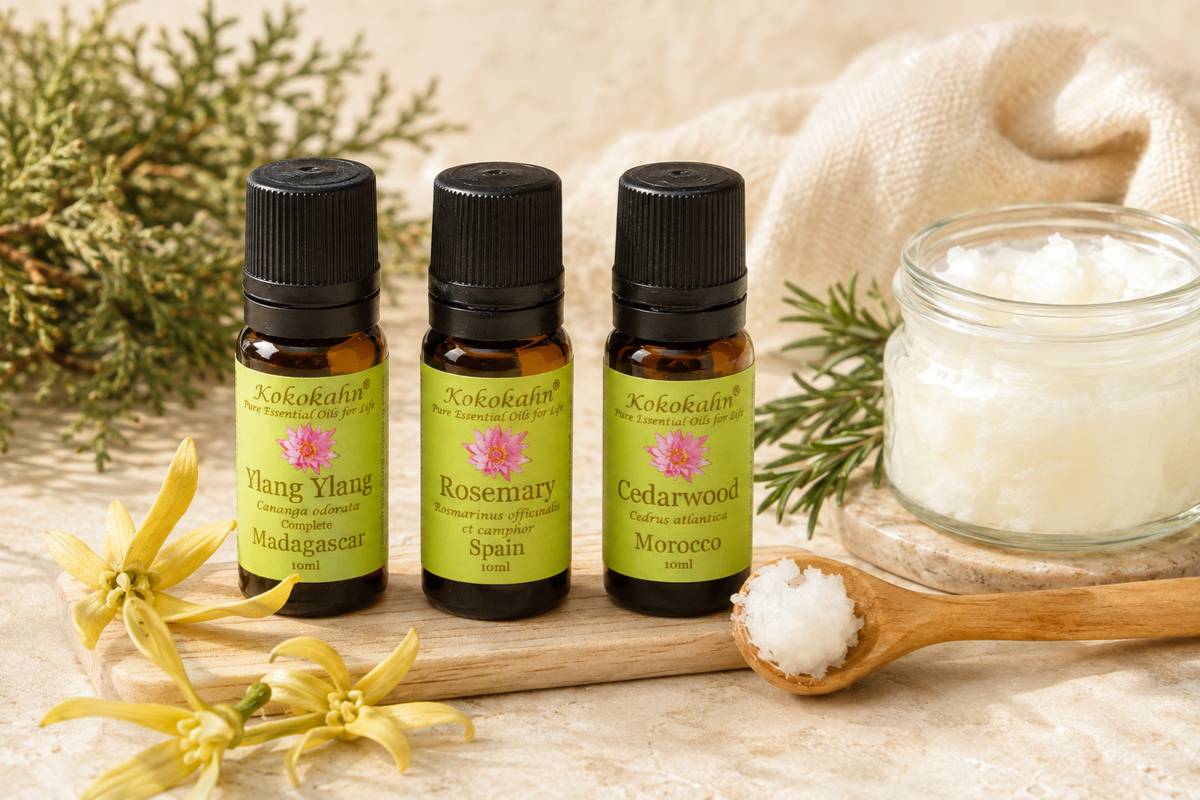
Noticing more hair in your brush—or that your hair doesn’t feel quite as full as it once did? Thinning hair can happen for many reasons, including hormonal changes, stress, illness, genetics, nutritional deficiencies and certain medications.
While essential oils cannot address every cause of hair loss, they can be incorporated into a nourishing scalp-care routine. Rosemary and cedarwood are two of the most popular essential oils for thinning hair, while ylang ylang and coconut oil help condition dry, fragile strands.
The Best Essential Oils for Thinning Hair
Rosemary Essential Oil
Rosemary is one of the most widely studied essential oils for supporting thinning hair. In a small clinical trial involving people with pattern hair loss, participants who used a rosemary oil preparation experienced an increase in hair count after six months. Although the research is still limited, rosemary has become a popular choice for scalp massage and healthy-looking hair.
Its fresh, herbaceous aroma also blends beautifully with warm cedarwood and floral ylang ylang.
Cedarwood Atlas Essential Oil
Cedarwood atlas has a warm, grounding, woodsy aroma and is frequently included in natural scalp-care blends. It was one of several essential oils used in a small clinical study involving people with alopecia areata.
Because the study evaluated an essential oil blend—not cedarwood by itself—we cannot say that cedarwood alone produces hair growth. However, it remains a wonderful addition to a nourishing scalp massage blend.
Ylang Ylang Essential Oil
Ylang ylang is especially helpful when the scalp and hair feel dry. Its rich floral aroma softens the sharper herbal notes of rosemary and complements the grounding scent of cedarwood.
Although ylang ylang has not been studied for hair growth in the same way as rosemary, it makes this treatment feel luxurious while supporting a conditioned, healthy-looking scalp and hair.
Unrefined Coconut Oil
Coconut oil does more than dilute the essential oils safely. Research suggests that it can penetrate the hair shaft and help reduce protein loss from damaged and undamaged hair. This may help protect fragile strands from breakage and leave hair feeling softer and more manageable. It is important to use unrefined, or cold-pressed coconut oil. Fractionated coconut oil is processed to remove most of its long-chain fatty acids, leaving the liquid portion. Using coconut oil in its natural, unrefined form is important to utilize all the therapeutic benefits nature intended.
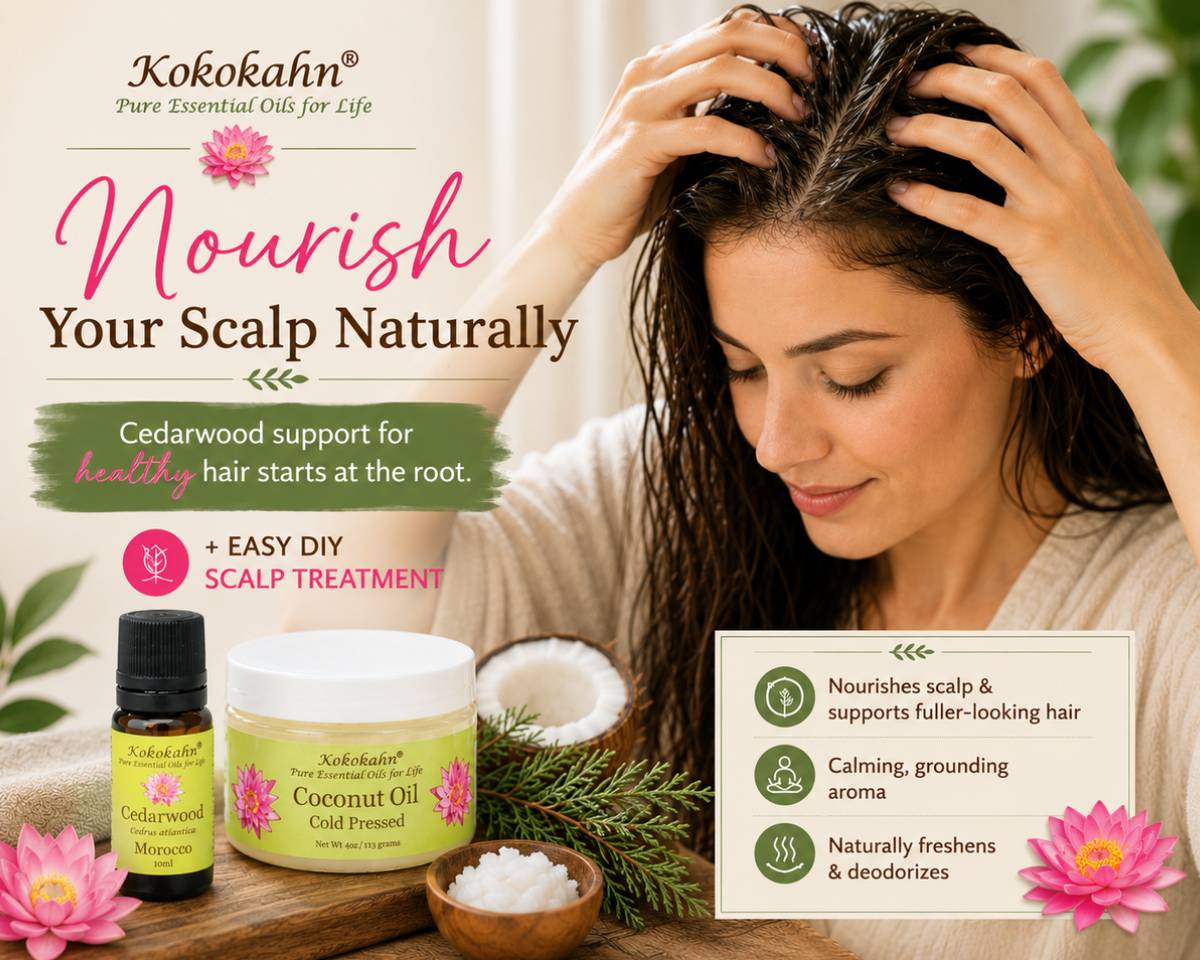
DIY Scalp and Hair Conditioning Treatment
This coconut oil treatment combines rosemary, cedarwood and ylang ylang essential oils for a simple weekly scalp-care ritual.
Ingredients
- One 1-ounce PET plastic container
- 2 tablespoons unrefined organic coconut oil
- 5 drops ylang ylang essential oil
- 5 drops rosemary essential oil
- 5 drops cedarwood essential oil
Directions
- Place the unrefined coconut oil in your container.
- Add the ylang ylang, rosemary and cedarwood essential oils.
- Mix thoroughly so the essential oils are evenly dispersed throughout the coconut oil.
- Label the container with the ingredients and date prepared.
This is good for about 6 months when stored in a cool, dark location.
How to Use Your Hair Treatment
After washing your hair, apply a small amount of the treatment to your damp scalp. Gently massage it into the scalp with your fingertips, then work a little through the hair—paying special attention to dry or fragile areas. Comb through with a comb or hair pick to get it fully and evenly dispersed.
Leave it on for a few hours or overnight before shampooing thoroughly. For fine hair, begin with a very small amount and concentrate primarily on the scalp to avoid weighing down your hair. In my experience, coconut oil washes out easily, and using only a small amount helps minimize oil transfer. You may still want to protect your pillowcase with an old towel when leaving the treatment on overnight, but I never have and haven’t had any problems with staining my sheets.
Use the treatment two to three times per week, or less frequently if your hair is naturally oily. If this is your first time using the blend, begin with a shorter treatment to see how your scalp responds before leaving it on overnight.
What if the Coconut Oil Becomes Solid?
Unrefined coconut oil is naturally solid at cooler temperatures and begins melting at approximately 75°F. This change in texture does not mean that the product has gone bad.
If the treatment solidifies during the winter, bring the closed container into the shower and allow the warmth and steam to soften it. Make sure the lid is tightly closed to prevent water from getting into the container. Water is the breeding ground for bacteria and can cause your recipe to go bad much faster. You can also scoop a small amount into your palm and let your body heat melt it before application.
Avoid introducing water into the container, since this recipe does not contain a preservative.
A Few Important Safety Tips
Essential oils are highly concentrated and should never be applied to the scalp undiluted. This recipe dilutes the essential oils in coconut oil at a safe dilution, but individual sensitivities can still occur.
Before using the treatment over your entire scalp:
- Perform a patch test on a small area first.
- Discontinue use if you experience burning, redness, itching or irritation.
- Avoid contact with your eyes.
- Keep the treatment away from children and pets.
- Speak with a qualified healthcare professional before use if you are pregnant, nursing, taking medication or managing a medical condition.
When Thinning Hair Needs More Than Hair Care
Thinning hair can sometimes be related to an underlying health condition. Consider speaking with a physician or dermatologist if your hair loss is sudden, occurs in patches, is accompanied by scalp pain or inflammation, or continues to worsen.
A dermatologist can help identify the type and cause of hair loss and recommend appropriate treatment. The sooner certain types of hair loss are diagnosed, the more treatment options may be available.
Make Scalp Care a Relaxing Ritual
Consistency is important with any hair-care routine. Set aside a few minutes two or three evenings each week to massage this aromatic treatment into your scalp. In addition to conditioning the hair, the warm floral and woodsy aroma creates a relaxing moment of self-care.
Ready to make your own? Shop the essential oils and coconut oil above to create this simple scalp and hair conditioning treatment at home.
Sources
rosemary oil clinical trial, aromatherapy and alopecia areata study, coconut oil and hair protein-loss study and American Academy of Dermatology’s hair-loss guidance.

Kokokahn
Pure Essential Oils for Life
A Little Aromatherapy in Your Inbox



Best of Florida Winner
2023–2026
© 2026 Kokokahn Essential Oils. All rights reserved.